5-Day Northern Circuit Safari
The essential Tanzania safari: endless Serengeti plains, the Ngorongoro Crater and Tarangire's elephant country in one seamless route.
- Serengeti plains
- Big Five
- Crater floor

Every month in Tanzania offers something. Here is how the seasons actually behave, and which one suits the safari you have in mind.
June to October is the classic safari season: dry skies, thinner vegetation and wildlife gathered around water. January to March is the other strong window, with green plains, newborn animals and fewer vehicles.
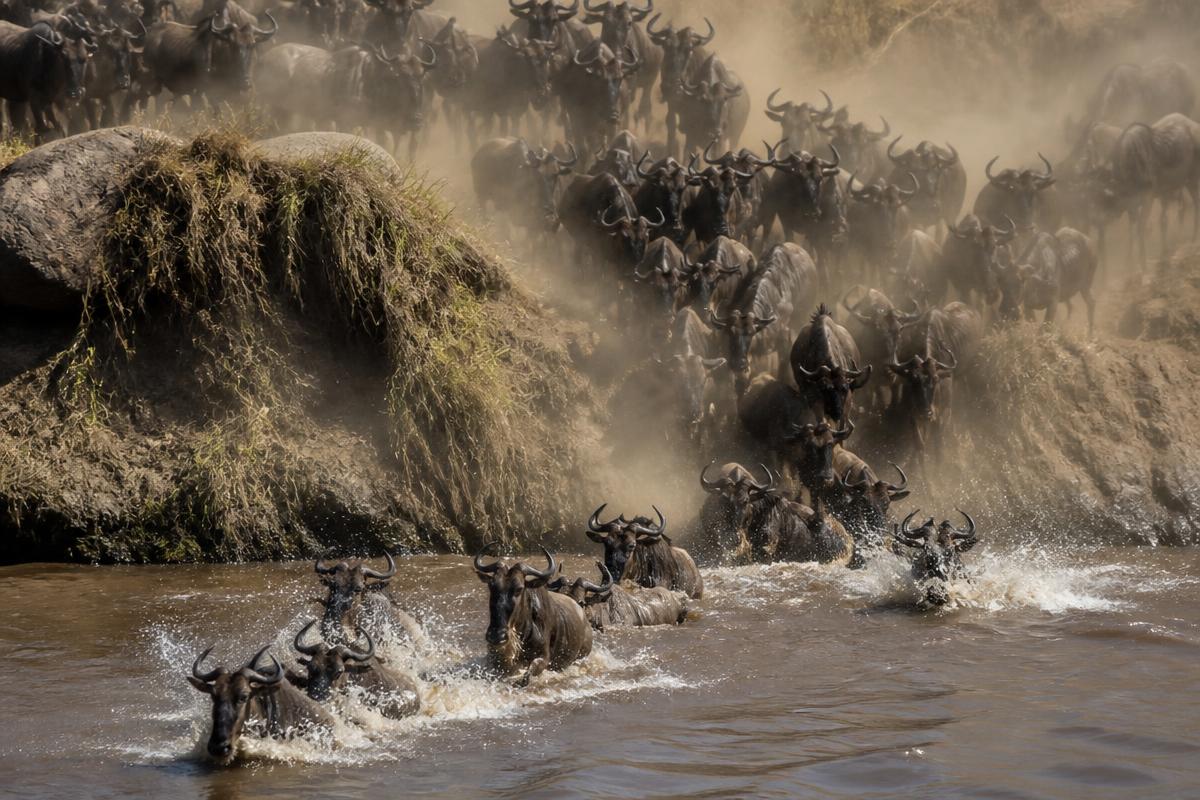
Grass is short, rivers are few and animals are predictable. This is when the migration reaches the northern Serengeti and river crossings become possible to witness.
It is also the busiest period, so camps inside the parks should be booked several months ahead.
Short rains arrive in November, and the long rains fall through April and May. Between them, January to March brings calving season on the southern Serengeti plains — extraordinary predator activity and beautiful light.
If river crossings matter most, plan for July to September in the north. If you want newborn wildlife and fewer vehicles, choose February. If budget matters, the green season delivers the same parks at lower rates.
Tell us your dates and interests and we will send a tailor-made itinerary and quote.
Plan my safariSafaris
The essential Tanzania safari: endless Serengeti plains, the Ngorongoro Crater and Tarangire's elephant country in one seamless route.
A week in the wild with time to go deeper — four parks, unhurried game drives and the chance to follow the migration herds.
Keep reading
Tanzania Travel Tips
What genuinely earns its place in your bag on a Tanzania safari — and what you can safely leave at home.
Destinations
Two of Africa's greatest wildlife areas sit a few hours apart. They are not interchangeable — here is how they differ.
Great Migration
The herds move all year. Here is roughly where they are, month by month, and what that means for your safari dates.